Showing posts with label OBD II. Show all posts

Wednesday, December 10, 2025

EV POWER

EV POWER


Alright, let's chat about what really powers your electric car. Forget the engine – the battery is the new heart of the machine. If you're thinking about making the switch, understanding this block of energy is the most important thing you can do. Let's break it down, not with confusing charts, but straight talk.

First, the good news: batteries are getting cheaper, much faster than anyone predicted. That scary price tag on EVs is coming down because the battery cost is tumbling. We're talking about the price per kilowatt-hour, which is how we measure this. A few years ago, this was a major barrier. Now, the global average has dropped to around R 2,000 per kilowatt-hour. This is a game-changer. It means car companies can build more affordable EVs with better range, and that saving gets passed right on to you, the buyer.

Concept EV, EPC

Now, let's tackle the big fear: "Will the battery die on me in five years?" Honestly, this is an outdated worry. Today's EV batteries are built to last. We're seeing real-world data that shows they lose only a tiny bit of capacity each year – think around 1.8%. Do the maths. That means a car you buy today with, say, a 500km range will still comfortably do over 400km a decade from now. Most manufacturers are so confident they're backing them with warranties for 8 years or 160,000 kilometres. The truth is, the battery will likely outlive your time with the car.

The Future is Just Around the Corner

You hear about "solid-state" batteries in the news. What's the hype? This isn't just a small upgrade; it's the next giant leap. These new batteries promise to be safer, pack in way more energy, and – this is the big one – charge in minutes, not hours. Companies like Toyota are aiming to have these in showrooms by 2027 or 2028. Imagine pulling in, plugging in for the time it takes to grab a coffee, and driving away with over 1,000km of range. That's the near future we're talking about. It makes today's already-good batteries look like a stepping stone to something incredible.

What About Hydrogen? Let's Be Real.

I know, you've heard about hydrogen cars. They fill up fast and have great range. It sounds perfect. So why aren't we all driving them? Let's be blunt about the realities.

Yes, you can refuel a hydrogen car in about five minutes, just like petrol. And yes, the range is impressive, often over 600km. But here's the catch that changes everything: the infrastructure and the cost.

Finding a hydrogen station is like looking for a specific needle in a country-sized haystack. There are only a handful in the entire world, and maybe one or two in a major city if you're lucky. You cannot fill up at home, ever. Contrast that with an electric car: you plug it into your wall in your garage every night. It's full every morning. For longer trips, fast public chargers are popping up everywhere, at shopping centres and along highways.

Then there's the price. Right now, driving a kilometre in a hydrogen car can cost you three to four times more than driving the same distance in an electric car. It's even more expensive than petrol. The technology is fascinating, but for the average person buying a car today or in the next few years, it's simply not a practical or affordable option. The race for the everyday car has been won by the battery.

So, What Should You Do?

If you're considering an EV, here’s my straightforward advice:

  1. Forget the battery anxiety. Focus on the car's official range rating and then think about your weekly routine. If the range covers your daily drive with plenty to spare, you're golden. Remember, you start every day with a "full tank" at home.
  2. Your parking spot is key. If you have a driveway, a garage, or even a dedicated parking bay where you can install a simple wall charger, you've already won. EV ownership becomes effortless. If you rely entirely on street parking, you need to plan a bit more and know where your local fast chargers are.
  3. Look at the warranty. A strong battery warranty (that 8-year, 160,000km one) is your peace-of-mind policy. It shows the manufacturer stands by their product.
  4. See it as a long-term investment. You're buying into technology that is still rapidly improving, but that's already incredibly capable. The car you buy today will be cheaper to run, smoother to drive, and simpler to maintain than a petrol car. And in a few years, when even better batteries arrive, you'll already have been part of the revolution.

The bottom line? The electric car, powered by these smart, ever-improving batteries, isn't just the future—it's a brilliantly sensible choice for the present. The numbers make sense, the convenience is real, and the tech is only getting better from here. Don't overcomplicate it. Make the switch, and you'll wonder why you waited so long.


Monday, February 5, 2024

Comparison of Leading Diagnostic Systems

Comparison of Leading Diagnostic Systems


If you looking to buy an OBD-II scanner, you'd probably be as confused as I was when I initially contemplated do so. In the realm of automotive diagnostics, the market offers a plethora of OBD-II systems, each vying for attention with unique features and capabilities. So let's embark on a constructive comparison of some prominent players in this arena: Launch, ODIS V23, VAS, Genuine Ross-Tech VCDS (VAG-COM), icarsoft, and the VAG Group Dealer Diagnostic Software.

1. Launch:

Launch stands out as a robust diagnostic system known for its user-friendly interface and broad compatibility across various vehicle makes and models. Its extensive database of diagnostic trouble codes (DTCs) and live data parameters makes it a versatile choice for technicians. Launch's continuous updates ensure compatibility with the latest vehicle systems, enhancing its utility for a diverse range of users.

2. ODIS V23:

ODIS (Offboard Diagnostic Information System) is the official diagnostic software for Volkswagen Group vehicles. Its seamless integration with VAG (Volkswagen Audi Group) cars provides in-depth access to manufacturer-specific systems. ODIS V23 excels in advanced coding and adaptation capabilities, making it a preferred choice for authorized dealerships and professional technicians dealing exclusively with VAG vehicles.

3. VAS (VAG Diagnostic Tool):

VAS, the VAG Diagnostic Tool, shares its roots with ODIS and is tailored for VAG Group vehicles. It offers comprehensive diagnostic functions, guided fault finding, and system-level adaptations. VAS is renowned for its accuracy and reliability in diagnosing intricate issues within VAG vehicles, catering to the discerning needs of dealerships and specialized repair shops.

4. Genuine Ross-Tech VCDS (VAG-COM):

The Genuine Ross-Tech VCDS, popularly known as VAG-COM, has gained a cult following among enthusiasts and professionals alike. Renowned for its detailed and customizable diagnostics, VAG-COM provides extensive control over VAG vehicle systems. Its interactive interface allows users to delve deep into coding and adaptations, making it a preferred choice for those who value precision and control.

5. icarsoft:

icarsoft offers a range of OBD-II diagnostic tools catering to various vehicle manufacturers. Its user-friendly interfaces and affordability make it accessible to a broad audience. icarsoft tools often feature comprehensive DTC libraries, live data streaming, and basic coding functionalities, making them suitable for both enthusiasts and independent repair shops.

6. VAG Group Dealer Diagnostic Software:

Designed for official VAG dealerships, the VAG Group Dealer Diagnostic Software is a comprehensive tool that provides unparalleled access to manufacturer-specific systems. Tailored for VAG vehicles, this software ensures accurate diagnosis, guided troubleshooting, and seamless integration with the latest advancements in VAG Group technology.

The choice between Launch, ODIS V23, VAS, Genuine Ross-Tech VCDS, icarsoft, and VAG Group Dealer Diagnostic Software hinges on specific user needs, vehicle preferences, and budget considerations. Launch excels in versatility, ODIS V23 and VAS cater to the intricate needs of VAG vehicles, Genuine Ross-Tech VCDS offers precision and customization, icarsoft provides affordability, and VAG Group Dealer Diagnostic Software ensures the highest level of integration for official dealerships. Evaluating the unique features of each system empowers users to make informed decisions based on their specific requirements within the diverse landscape of OBD-II diagnostic tools.

Unlocking the Mysteries of Automotive Diagnostics

Unlocking the Mysteries of Automotive Diagnostics


In the intricate world of modern automotive technology, the ability to diagnose and troubleshoot issues has become an indispensable skill for both mechanics and car enthusiasts. One of the key frameworks governing this diagnostic landscape is the Onboard Diagnostics (OBD) system, specifically the second iteration, OBD-II, which adheres to the standards set by the Society of Automotive Engineers (SAE).

SAE and OBD-II Standards:

The SAE plays a crucial role in establishing standards that govern automotive diagnostics. In the context of the VW Polo and many other vehicles, OBD-II is the standardized system designed to monitor and report the performance of various vehicle systems, ensuring compliance with emission regulations.

Stoichiometry and Emission Control:

Understanding stoichiometry is fundamental to comprehending OBD-II's role in emission control. Stoichiometry refers to the chemically balanced ratio of air to fuel necessary for complete combustion. OBD-II monitors this ratio through sensors, with the Oxygen Sensor System (OXS) playing a pivotal role in providing feedback to the engine control module (ECM).

EPC Light - Electronic Power Control:

One of the telltale indicators of an issue within the electronic realm of the VW Polo is the Electronic Power Control (EPC) light. This warning light illuminates when the system detects a fault affecting the engine's performance. The EPC system is responsible for managing the throttle, ensuring optimal power delivery and efficiency.


Universal OBD-II tester, EPC


Check Engine Light and DTC Codes:

The infamous Check Engine Light (CEL) is another beacon of concern for drivers. When illuminated, it signals potential issues with the engine or emissions system. Diagnostic Trouble Codes (DTC), communicated through the OBD-II system, provide mechanics with specific information about the nature of the problem, allowing for a targeted and efficient diagnosis.

Limp Mode and Safety Features:

In the event of a critical issue, the VW Polo employs a safety feature known as Limp Mode. This mode restricts the vehicle's performance to prevent further damage, allowing the driver to reach a service center safely. Understanding the triggers for Limp Mode requires decoding the specific DTCs stored in the OBD-II system.

Sensors, Senders, and Actuators:

Central to the OBD-II system are an array of sensors and senders strategically placed throughout the vehicle. These components, such as the Oxygen Sensor, monitor various parameters and relay information to the ECM. Actuators, controlled by the ECM, respond to these inputs by adjusting engine functions to maintain optimal performance and emissions.

16-Pin OBD-II Connector:

Mechanics rely on the 16-pin OBD-II connector to interface with the vehicle's diagnostic system. This standardized connector provides access to the wealth of information stored within the OBD-II system, facilitating precise diagnosis and troubleshooting.

Automotive Acronyms:

Navigating the world of automotive diagnostics often involves deciphering a myriad of acronyms. From EPC to DTC,to HVAC, to OXS, to EGR and beyond, mechanics adeptly use these shorthand terms to  efficiently communicate and clients and pinpoint issues with precision.However, it can confuse the hell out of them.

Delving into the realm of automotive diagnostics for the VW Polo unveils a sophisticated interplay of technologies governed by SAE standards and OBD-II protocols. Mastery of these systems empowers mechanics to unravel complexities, ensuring optimal performance and emission control for vehicles on the road. 

As technology continues to advance, a deep understanding of automotive acronyms and diagnostic intricacies remains paramount for those entrusted with keeping our vehicles running smoothly. However, it would be feasible even advisable for vehicle owners to get get up to speed with Automotive technology. Technology is here to stay and no matter how hard we try, cannot will it away.


Friday, June 9, 2017

On-Board Diagnostics

All about On-Board Diagnostics


On-board diagnostics are here to stay and any amount of wishing will not make them go away. Virtually every  car on the road today is fitted with one. The main objective behind having on-board equipment installed in automobiles is to control and  limit the level of harmful emissions emitted by these cars. Eco friendly motoring is the new way of keep the global carbon footprint to a minimum. Every motorist is responsible for their own. So when the check engine turns on, the on-board diagnostic equipment is trying to tell you that your car is failing its emission test and that it should be repaired before its going to drive properly again.


best obd scanner - There is no such thing as the best OBD scanner. But there is the best OBD scanner for a specific brand of car. For example VCDS is the best for Volkswagen (VAG) whereas  iCarsoft i980 is better suited for Mercedes Benz and BMW Scanner v1.4.0 OBD2 / OBDII Diagnostic Interface is best for BMW. LAUNCH, VAS 5054A ODIS,  AutoBoss, TOAD, MaxiDas, etc, are multi car diagnostic systems and are more suited for workshop use than DIY. There are plenty of DIY scanners among which are Autel MaxiScan MS509, Innova 3100,  Konnwei KW820, PowerLead Cadt PL-OM580, AutoPhix OB123, Acton CP9575, and hundreds of others, any one of which would probably the best scanner for a car owner. 

bluetooth obd - most likely refers to ELM 327 Bluetooth OBD2 / OBDII for Android that works pretty well with downloadable apps like OBD Auto Doctor, OBDeleven, OBD eZWay, OBD Car Tracker, OBD Fusion and OBDLink etc. This turns your cellphone or tablet a niffty diagnostic device.

car obd - refers to the on-board diagnostic system all car makers are obligated to install in vehicles manufactured after  1996 and beyond.

car obd reader - refers to an app or a hardware device that connects to a car via an interface cable or via bluetooth or WiFi

obd - is an automotive term referring to a vehicle's self-diagnostic and reporting ability.  


obd adapter - is normally a cordless bluetooth enabled adaptor that plugs into the car's 16 Pin DLC much like the ELM327 does. There are severa dozen manufactures who make them, amongs which are the Ozzy Gear OBD2 Scanner Bluetooth, Hikeren OBD2 Bluetooth Module, iAutomobil OBD2 Bluetooth Module, Foseal Mini OBD Bluetooth Scanner Adapter, Panlong Bluetooth OBD2 Scan Adapter, BAFX Products 34t5 Bluetooth OBDII Scan Tool.

obd android - there several OBD android devices. Vgate Bluetooth 4.0 OBDII is a Code Reader for both IOS & Android,  Hikeren Mini Bluetooth OBD2 is another  Car Scan Tool for android and HH OBD Advanced ELM327 OBDII V1.5 is yet another android Bluetooth Diagnostic Tool.

obd bluetooth - is the bluetooth enabled version of the scanner described above which is commonly used with a cell phone / tablet apps, and can also work with a bluetooth enabled laptop.

obd bluetooth adapter - is just another term use to refer to an OBD android / bluetooth adapter or  obd bluetooth android adapter.

obd cable - is a physical interface that plugs into the car's DLC. For example, VAG-COM V409.1 OBD OBD2 USB Cable is an OBD cable and so is KKL OBD2 USB Diagnostic Cable  both used specifically for Audi, VW, SEAT and SKODA.

obd car - Any car with either and OBD-I or OBD-II system installed. There are older cars that are completely devoid of diagnostics.

obd codes -  Are On-Board Diagnostic Codes, sometimes referred to as fault codes

obd code reader - is a handheld DIY device that purely extracts data from the ECU bus but can alter the data nor write it back to the ECU.

obd connector - refers to the DLC fitted under the dashboard close to the drivers seat. It can easily be identified by its light purple colour in VW's.

obd deviceBMW motorcycle combo - OptiMATE  canbus connector is an OBD device and so are most of the adapter, cables and bluetooth connectors mentioned above.

obd diagnostics

obd reader - normally a hand held deice capable of reading OBD data from the car's ECU but not able to write back to it.

obd system - is a standardized microcontroller based system installed in cars that continually monitor its emission control systems, by using engine mounted electronic sensors and feed back from the catalytic converter 

obd diagnostic interface - refers to the USB to 16 pin DLC cable, that connects between the car and the laptop computer used to interrogate the ODB system.

obd interface - as above


obd i scanner - OBD I scanners are used on pre 1996 cars. It's been succeded  by OBD II.

obd ll - sometimes called OBD eleven, but its just a play on OBD-ii in upcase Ls. There is a bluetooth android device named ODB eleven.


obd ii - Is sometimes written as OBD 2 and is the current version of automotive vehicle On-board Diagnostics introduced in 1996 which superceded OBD 1 used in cars prior to that.

obd ii scanner  - refers to any an all devices capable of interfacing with the On-Board diagnostic system of a car used to read error codes.

obd port - The connector  fitted under the dashboard or behind the ashtray inside the car where the bluetooth adapter or the OBD inerface cable plugs into.

obd scanner - can either be a handheld  hardware device or a laptop based software /software device that interfaces with  the car's DLC, capable of reading the ECU, displaying DTCs, etc, and can either be OBD1 or OBD II.

obd scan tool - see obd scanner above.

obd tester - is an OBD scanner, that can take the form of a dedicated handheld device, or a computer based scanner or cellphone or tablet based scanner.

obd tools - refers to a collection of either diagnostic software or 

obd wifi - a codless device much like a bluetooth ELM 327 but that is rather WiFi enabled.


Thursday, December 1, 2016

VW AUDI SKODA SEAT

VW AUDI   SKODA  SEAT 

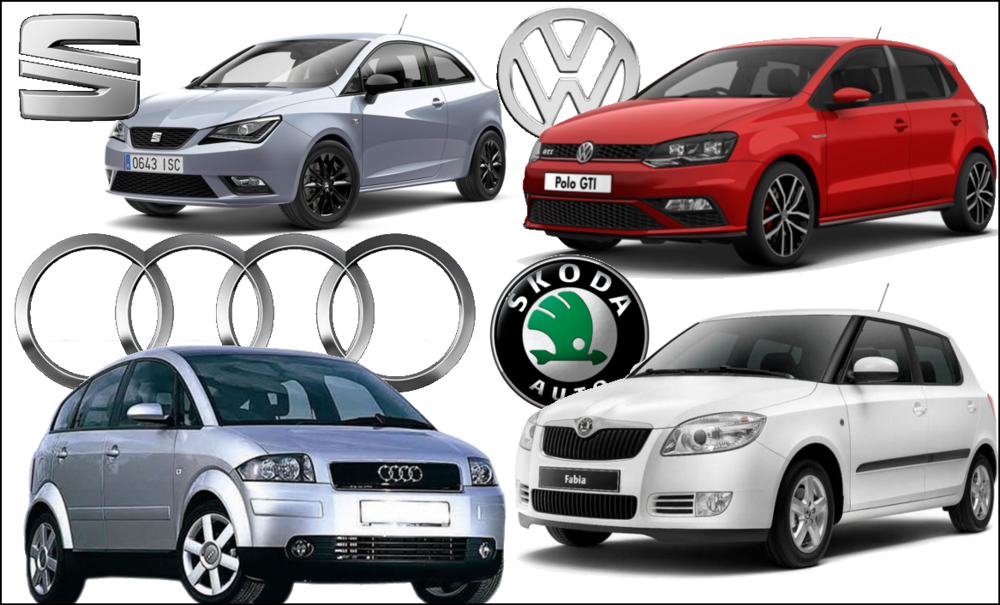
Can you believe it, Volkswagen  cars are produced with cookie cutters! Ok, ok that's exaggerating it a bit. I just needed to stretch this  analogy so that you can stretch your  imagination.  Volkswagen AG (VAG) has use the A04 / PQ24 platform for several of their cars during 2001 - 2015. Hence it turns out that the VW Polo 9N1, VW Polo 9N2,  VW Polo 9N3, VW Polo 9N4, the Volkswagen Fox 5Z1,Volkswagen Fox 5Z3, the Skoda Fabia 6Y2, Skoda Fabia Sedan  6Y3, Skoda Fabia Combi 6Y5, the Skoda Fabia-2 542, Skoda Fabia Combi-2  545, the Russian Skoda Fabia-2  572, the Skoda Roomster 5J7, the Audi A2 8Z0, the Seat Ibiza-3 6L1 and the Seat Cordoba 6L2 all share many similar features and electronic modules, engine components, wiring harnesses, if not the same, perhaps even identical. By just looking at the four of them, it is easy to see this, except for cosmetic changes of course. But underneath their outer apparel they are the virtually the same car using the same mechanical and electronic spares.


Volkswagen subsequently revised  their vehicle platform naming and identification system, for their ultra-compact (city cars), super-mini cars, compact cars (small family cars), mid-size cars and their full-size luxury cars to  numbers that look like PQ24, PQ25, PQ34, PQ35, etc. PL45, PL46, etc, PL62,  PL64 etc. For the uninitiated it only brings about more confusion in an already confusing time of information overload.


SUPER MINICARS

"A01" platform for the Volkswagen Polo Mk1,
"A02" platform for the Volkswagen Polo Mk2 - Classic, 
"A03" platform for the Volkswagen Polo Mk3- 6N/6KV,
"A04" platform is now known as the PQ24  -  all cars listed above,
"A05" platform is officially the PQ25 - for Audi A1, VW Polo (6R) and  SEAT Ibiza (6J). 

But for now we are interested in the meaning of platform codes like PQ24, PQ25, PQ34, PQ35, etc. PL45, PL46, etc, PL62,  PL64 and see how it affects the VW Polo range of cars with regards to spares and repair procedures.  When deconstructing the platform codes, we discovered that the  nomenclature for PQ24 is derived as follows:-

P - stands for a passenger car platform
Q - (Quer in German) stands for a transverse engine
2 - stands for the platform size or class
4 - stands for the generation
Essentially implying a passenger car platform with a transverse engine, fitted into a supermini of the fourth generation (MkIV).
Meaning, one of the cars mentioned in the heading of this blog installment, since all of them are classified as supermini cars.

Whereas the nomenclature for PL45 is derived as follows:- 
P - stands for a passenger car platform
L - (Längs in German) stands for a longitudinal engine
2 - stands for the platform size or class
5 - stands for the generation
Essentially implying passenger car platform with a longitudinal engine, fitted into a mid-size cars of the fifth generation (MkV).
Meaning a Volkswagen Passat (3B) or a Audi A4 (8D), etc.

Whereas the nomenclature for PL64 is derived as follows:
P - stands for a passenger car platform
L - (Längs in German) stands for a longitudinal engine
6 - stands for the platform size or class
4 - stands for the generation
Essentially implying passenger car platform with a longitudinal engine, fitted into a full-size luxury car of the fourth generation 
Meaning a Volkswagen Phaeton, Audi A8, or even a  Bentley Continental GT, etc.

Platform nomenclature was decided because car manufacturers are determined to get a better return on investment by using the same robotic arms and software programming on their  assembly lines / conveyer belts to assemble a host of different vehicles that look similar, with predominantly the components.  Also meaning that the space needed to stock parts are greatly reduced because instead of stocking the same part for 15 different models they have to stock just just one.


Case in point is the Joint-venture between Volkswagen and Ford Motor Company for producing the  Volkswagen Sharan (7M), SEAT Alhambra (7M), and the Ford Galaxy (7M). Volkswagen also started a Joint-venture between themselves and Daimler AG, to produce the Volkswagen LT range and the Second and third generations Mercedes-Benz Sprinter. In a sense one can just call this badge engineering, because Mazda and Ford have also have had long-term alliances, making cars until their partnership dissolved. 

Friday, November 25, 2016

PETROL vs DIESEL vs ELECTRIC VEHICLE COMPARISON

PETROL, DIESEL, ELECTRIC VEHICLE COMPARISON

Owning a VW Polo is fairly easy but when the exorbitant costs of unforeseen repairs and regular servicing are added, it becomes really expensive. To make matters worse, with the regular petrol price hikes, maintaining that VW Polo can become a bit of a burden.  The distance traveled by the average motorist, based on "official trade figure"  is estimated at 20 000Km per annum which directly translates to about 1667km per month or 55 km per day. At the current price of petrol (R12.89 per litre), that 55km would cost you about R43.00 subject to your Polo's Km/litre average consumption and your personal driving style. Extrapolated over a period of one year would cost you a cool R15,480.00-plus per annum and over the 60 months finance period, a whopping R77,400.00.


Volkswagen  e-Golf EV Charger Connection

Suddenly a diesel powered VW Polo TDI seems more financially attractive, especially considering that its fuel consumption of 4.6 litres / 100 km is far lower than the 5.9 litres / 100km of the low end VW Polol 1.4 Trendline. If truth be told, its a saving of at least 25 percent comparatively speaking but it's really  not that cut and dried.  My hesitancy towards a Diesel Vehicle gravitates around the fact that Volkswagen as a company had 'cheated on the fuel consumption and emissions figures globally', so I'm wondering how true these stats released by Volkswagen really are. Surprisingly, independents tend not to do comparative consumption studies or rather if they do, they don't make the results public. However, my consolation is based on my wife's Mercedes Benz C250D,  that uses a sight less fuel than her previous petrol powered C230E model over the same distance. Besides, virtually every heavy duty delivery vehicle out there is diesel powered because big business would invariably choose the more economical option. 'Diesel vehicles also tend to be less troublesome than petrol powered trucks'. They may not be as fast as their petrol powered versions but they have enormous torque, far great than their petrol counterparts. Then there is always the turbo version to consider that is much faster. Be that as it may, I'm not completely convinced whether or not to go that route.


Petrol and diesel fuel consumption comparison chart

There is a third alternative that I should explored and that is an electric powered vehicle. I quite like the VW e-Golf because its completely silent. It goes up to an estimated 133km per charge which I deem sufficient for short distance city driving. Unlike other manufacturer's purpose built electric cars, the VW e-Golf is essentially a normal VW car with an electric motor sitting in place of a petrol or diesel engine, with the fuel tank space occupied by its battery pack. Several car manufacturers are currently producing a small number of electric vehicles but it's painfully obvious that their range will expand in the coming years. So it's a good idea to embrace the newer zero emissions electric technology now, rather than later, in preference of further polluting our eco-system  with carbon dioxide emissions. But these EV's are a lot more expensive than both the petrol and diesel versions and the cost of electricity for charging its lithium-ion batteries still needs to be added. There is a likelihood that government will subsidize electric cars above a certain price range. It would probably work along the lines similar to the Eskom subsidy which is available to those home owners who intend installing a heat pump in their homes. My hesitancy revolves around recharging the EV when not near the home-based power unit. Regardless,  it makes more sense to buy the electric car, rather than a petrol or diesel car? My biggest concern though, is that lithium-ion batteries are still in its infancy or rather hasn't  properly matured yet. Though, there is a battery leasing option that comes at a monthly cost which will bring the overall monthly cost to more than than of maintaining a diesel VW Polo. Somehow this EV isn't looking that great anymore. But what I need to say is that I am very impressed by the distance that the Tesla can go on a single charge, as well as the overall quality of their new battery pack.
This impressive 115-hp electric motor with 269nm of torque makes for a really enjoyable drive.

EV Fuel Cost Comparison Example
UnitsBEPetrolDiesel
Combined Fuel Efficiency150Wh/km 8L/100km 6L/100km
Annual Mileagekm120,00020,00020,000
Annual Fuel RequirementLitres0,0016001200
kWh2,400n/an/a
Energy / Electricity Prices / Unit

Litre /KW11.7512.9810.69


Sunday, January 24, 2016

IMMOBILIZER

VW, AUDI, SKODA & SEAT IMMOBILIZER PROBLEMS

The worst thing that can ever happen to you especially when you're in a hurry to get to an appointment on time,  is to turn-on your car's ignition key and see a yellow immobilizer symbol (car with a key below it) flashing in your instrument cluster accompanied by a fairly loud ear piecing audible signal. When you witness this, your car isn't going to go anywhere and neither are you. I suppose there are worst scenarios you could be in like when you stop along a dark and lonely road at night, compelled to take a pee, only to return to your car, to be met by the yellow flashing immobilizer symbol. There are so many VAG Vehicle owners who have experienced some sort of immobilizer problem with their cars and those drivers who haven't, I'm so sorry to say, but its only a matter of time before you do. That sounds very pessimistic, but once again, I'm sorry to say but that's the reality of the situation. It is what it is.


The dreaded Immobilizer symbol

Looking through my database of immobilizer issues, some of which I have shared with you below, gives you a fair idea of what can be expected from your VAG vehicle in the future. VW, Seat, Skoda and Audi vehicles comes out with a various versions of theft deterrent software systems, starting with vehicles without an Immobilizer (Pre 1995),   to Immobilizer I (Immo I - 1996), to Immobilizer II (Immo II - 2002+), to Immobilizer III (Immo III) aka Transponder III, to Immobilizer IV (Immo IV) and  the 5th generation Immobilizer (Immo V - 2011). There are also various Immobilizer hardware integrated into the instrument cluster, two of which are (J285 & J334 Immobilizer Control Module) and  (J285 & J362 Immobilizer Control Module).  Not to state the obvious, VAG cars are equipped with Anti-Theft Engine Disable immobilizers to circumvent theft; and should a car thief swap-out an ECU without matching it to instrument cluster, the engine will start briefly then die and this will be repeated indefinitely. 


AUDI, SEAT, SKODA and VW AVITARS


Since the implementation of Immo 3, variable code evaluation is use in both  the engine control unit and Immobilizer control unit. They use an equation / algorithm that calculates the generated variable code that both control units must agree upon. So, if you ever start your car and it stalls after about 1 second, then its perfectly safe to suspect the Immobilizer as faulty whether it displays the immobilizer symbol or not.  In such a case  the DTC memory should be checked and, if necessary, the control module adapted. Whether or not the has Immobilizer disabled the ECU can be verified under address word 17, and or address word 25, using a scan tool like VCDS, ODIS,  Launch, Autoboss,  Autel MaxiDAS, etc. The data whether  ON or OFF, sits in measuring block 007 under Central locking. Most importantly the DTC are the clues that's going to point you in the right direction.


ODIS is the latest VW, AUDI SEAT SKODA, BENTLEY,
LAMBORGINI and PORSCHE Diagnostic Software.


So, when the ignition is switched ON, the Instrument cluster / Immobilizer Control Module enables or disables specific vehicle functions based on a hand shake. What this means is that when the switchblade key is pushed into the ignition lock, or placed in proximity of the  coil transmitted radio signal, the instrument cluster electronics detects the key and initiates a data transfer between the pickup coil in the steering column or ignition switch and the RFID (Radio Frequency Identification) capsule embedded in the fob key. If the correct / unique identification number / authorized security data stream is received at the Immobilizer Control Module it permits the engine to start and idle uninhibited. But if it doesn't the car wont start.
RFID capsules are tiny, it stores data unique to your car  and can be found inside your fob key.


The list below constitutes just a smatter of immobilizer errors that VAG car owners can experience, which range from a low fob key battery, to an instrument cluster or ECU replacement. And somewhere in between you will have, wiring harness issues ranging from intermittent to open circuit and even short circuit. Active RFID tags have their own power source whereas passive RFID tags used in all fob keys don't require power. 
Essentially they consist of a scanning antenna, a  transceiver with a decoder to interpret the data and  a transponder - the RFID tag - that has been pre-programmed with the relevant information specific to your VIN, ECU and Instrument cluster. A dry joint on the pickup coil inside the capsule can prevent the necessary hand shake thus its a good idea to have a second matched fob key available if the key that won't start the car is suspect. In the list below, you also find appropriate codings for  Immobilizer Module address 25 and as  can be clearly seen, different control modules have different ODX/ASAM datasets, different software versions and different .rod files. Before changing any codes, make certain that you have a printed copy of all existing codes.

Immobilizer DTCs, Immobilizer Errors, Immobilizer Problems & Codes 

Address 25: Immobilizer
   Cannot be reached
--------------------------------------------------
Address 25: Immobilizer
   unobtainable
--------------------------------------------------
Address 25: Immobilizer      
   DTCs not supported by controller
   or a communication error ocurred
--------------------------------------------------
Address 25: Immobilizer      
   16897 - Incorrect Immobilizer code
   P0513 - 35-00 - Malfunction in Circuit
   17978 - Motronic Engine Control Module (ECM) -J220- Electronically locked
   P1570 - 35-00 - Malfunction in Circuit
--------------------------------------------------
Address 25: Immobilizer
   Part No: 6X0 953 257
   Component: IMMO 0008
   Coding: 00001
   Excessive Comm Errors
--------------------------------------------------
Address 25: Immobilizer
   Control unit: 6Y0 920 883 M
   Component: IMMOBILIZER VDO V04
   Coding: 00102
--------------------------------------------------
Address 25: Immobilizer
   Part No: 6Q0 920 825 E
   Component: IMMOBILIZER VDO V06
   Coding: 03144
   01176 - Key
   07-00 - Signal too Low
--------------------------------------------------
Address 25: Immobilizer      
   Part No SW: 1K0 920 874 JX    HW: 1K0 920 874 JX
   Component: IMMO            3HL 2416
   Revision: V0005000    Serial number: VWX7Z0G524F0LU
   01176 - Key
   008 - Implausible Signal - Intermittent
--------------------------------------------------
Address 25: Immobilizer      
   Controller: 6H0 953 257 B
   Component: IMMO VWZ3Z0X1234088 V71
   Coding: 09600
   01176 - Key
   65-10 - Unauthorized - Intermittent
--------------------------------------------------
Address 25: Immobilizer      
   Controller: 038 906 019 DQ
   Component: 1,9l R4 EDC 0000SG 1536
   Coding: 00002
   17978 - Engine Start Blocked by Immobilizer
   P1570 - 35-00 - Malfunction in Circuit
   16989 - Internal Control Module: ROM Error
   P0605 - 35-00 - Implausible Signal
--------------------------------------------------
Address 25: Immobilizer      
   Controller: 4A0 953 234 F
   Component: IMMO AUZ9Z0T7884365 D77
   Coding: 00000
   01176 - Key
   07-10 - Signal to Low - Intermittent
   00750 - Warning Lamp
   31-10 - Open or Short to Ground - Intermittent
--------------------------------------------------
Address 25: Immobilizer  
   Part No: 6L0 920 803 E
   Component: IMMOBILIZER     AGD V05
   Coding: 00105
   01177 - Engine Control Unit
   65-10 - Unauthorized - Intermittent
--------------------------------------------------
Address 25: Immobilizer
   Part No: 6X0 953 257
   Component: IMMO 0003
   Coding: 00003
   00750 - Warning Lamp
   31-00 - Open or Short to Ground
   01314 - Engine Control Module
   49-10 - No Communications - Intermittent
   01176 - Key
   65-10 - Unauthorized - Intermittent
--------------------------------------------------
Address 25: Immobilizer
   Part No: 4A0 953 234
   Component: IMMO AUZ9Z0W5254731 D77
   Coding: 00000
   01176 - Key
   07-10 - Signal too Low - Intermittent
--------------------------------------------------
Address 25: Immobilizer
   Part No SW: 1T0 920 873 E HW: 1T0 920 873 E
   Component: IMMO VDD 3808
   Revision: V0001000 Serial number: VWX7Z0G33ND1A0
   00003 - Control Module
   014 - Defective
--------------------------------------------------
Address 25: Immobilizer
   Part No: 1H0 953 257 B
   Component: IMMO VWZ3Z0M2519376 V00
   Coding: 09600
   00546 - Data wiring faulty
   27-00 - Implausible Signal
--------------------------------------------------
Address 25: Immobilizer       (J334)
Part No SW: 5K0 953 234 HW: 5K0 953 234
Component: IMMO H03 0607
Serial number: 00000000000000
Coding: 000000
ASAM Dataset: EV_Immo_UDS_VDD_RM09 A03009
ROD: EV_Immo_UDS_VDD_RM09_SE36.rod
9456681 - Key
B104C 29 [009] - Implausible Signal
Confirmed - Tested Since Memory Clear
--------------------------------------------------
Address 25: Immobilizer
Part No: 1H0 953 257 B
Component: IMMO VWZ3Z0E1731908 V00
Coding: 09600
00546 - Data wiring faulty
27-00 - Implausible Signal
01181 - Initializing; Only 2 Keys Learned
35-00 - Implausible Signal
01179 - Incorrect Key Programming
35-00 - Implausible Signal
--------------------------------------------------
Address 25: Immobilizer
Part No: 1K0 920 960 L
Component: IMMO 3354
02241 - Engine Control Module; Immobilizer Data not Adapted
000 - - - Intermittent
--------------------------------------------------
Address 25: Immobilizer
Part No SW: 3C0 959 433 H HW: 3C0 959 433 H
Component: IMMO 038 0364
Revision: 00038000 Serial number: VWZCZ000000000
Part No: 3C0 905 861 C
Component: ELV 023 0350
3C0905861C ELV 023 0350
02823 - Requirements for Locking the Steering Column Lock not met
000 - - - Intermittent
02861 - Electronic Steering Column Lock Check Sum Error
008 - Implausible Signal - Intermittent
02815 - Steering Column Lock; Supply Voltage for Locking Motor
002 - Lower Limit Exceeded - Intermittent
02817 - Steering Column Lock; Enabling Wire from Steering Wheel Electronics
002 - Lower Limit Exceeded - Intermitten
02818 - Steering Column Lock; Enabling for Electronic Ignition Lock
009 - Open or Short to Ground
02811 - Control Module for Electronic Steering Column Lock (J764)
014 - Defective - Intermittent
--------------------------------------------------
Address 25: Immobilizer
Part No: 2K0 920 941 CX
Component: IMMO VDD 0716
--------------------------------------------------
Address 25: Immobilizer
Part No: 1P0 920 825 B
Component: IMMO VO3 0424
--------------------------------------------------
Address 25: Immobilizer
   Part No: 6Q0 920 923 Q
   Component: IMMOBILIZER VDO V03
   Coding: 01444
--------------------------------------------------
Address 25: Immobilizer
   Part No: 6Q0 920 923 R
   Component: IMMOBILIZER VDO V02
   Coding: 01432
--------------------------------------------------
Address 25: Immobilizer
   Part No: 6Q0 920 903 J
   Component: IMMOBILIZER VDO V06
   Coding: 01431
--------------------------------------------------
Address 25: Immobilizer      
   Controller: 6Q0 920 825 E
   Component: IMMOBILIZER VDO V03
   Coding: 01144
--------------------------------------------------
Address 25: Immobilizer
   Part No: 6Q0 920 825 F
   Component: IMMOBILIZER AGD V05
   Coding: 01132
--------------------------------------------------
Address 25: Immobilizer
   Part No: 6Q0 920 804
   Component: IMMOBILIZER VDO V06
   Coding: 01131
--------------------------------------------------
Address 25: Immobilizer (J334)
   Part No SW: 5K0 953 234 HW: 5K0 953 234
   Component: IMMO H04 0406
   Serial number: 00000000000000
   Coding: 000000
   ASAM Dataset: EV_Immo_UDS_VDD_RM09 A03008
   ROD: EV_Immo_UDS_VDD_RM09_SE25.rod
--------------------------------------------------
Address 25: Immobilizer (J334)
Part No SW: 6J0 920 901 A    HW: 6J0 920 901 A
Component: IMMO          X07 0110
Serial number:            
ASAM Dataset: EV_Immo_UDS_VDD_RM09 A03004
ROD: EV_Immo_UDS_VDD_RM09_SE25.rod
--------------------------------------------------
Address 25: Immobilizer (J334)
Part No SW: 6R0 920 861 B HW: 6R0 920 861 B
Component: IMMO H23 0110
Serial number:
ASAM Dataset: EV_Immo_UDS_VDD_RM09 A03004
ROD: EV_Immo_UDS_VDD_RM09_VN35.rod
--------------------------------------------------
Address 25: Immobilizer (J334)
   Part No SW: 5K0 953 234 HW: 5M0 920 960 E
   Component: IMMO H14 0112
   Revision: X0014004 Serial number:
   Coding: 000000
   ASAM Dataset: EV_ImmoUDSMM9RM10 A01102
   ROD: EV_ImmoUDSMM9RM10.rod
--------------------------------------------------
Address 25: Immobilizer (J334)
Part No SW: 5K6 920 970 G HW: 5K6 920 970 G
Component: IMMO H05 0206
Serial number: 00000000000000
ASAM Dataset: EV_Immo_UDS_VDD_RM09 A03004
ROD: EV_Immo_UDS_VDD_RM09_VW36.rod
--------------------------------------------------
Address 25: Immobilizer
   Part No SW: 3C0 959 433 AR    HW: 3C0 959 433 AR
   Component:    IMMO         043 0383
   Revision: 00043000    Serial number: VWZCZ000000000
   Part No: 3C0 905 861 H
   Component:    ELV          028 0380
   3C0905861H    ELV          028 0380
--------------------------------------------------
Address 25: Immobilizer
   Part No SW: 1K6 920 974 H    HW: 1K6 920 974 H
   Component: IMMO            VDD 2416
   Revision: V0003000    Serial number: VWX7Z0H43NL82Z
--------------------------------------------------
Address 25: Immobilizer
Controller: 6X0 953 257
Component: IMMO 0007
Coding: 00001
--------------------------------------------------
Address 25: Immobilizer
Part No: 5P0 920 825 A
Component: IMMO VO3 0422
--------------------------------------------------
Address 25: Immobilizer
   Part No SW: 1Z0 920 912 E    HW: 1Z0 920 912 E
   Component: IMMO            VD1 1610
   Revision: V1610056    Serial number: SKZ7Z0G4047329
--------------------------------------------------
Address 25: Immobilizer (J334)
Part No SW: 5K0 953 234 HW: 5K0 953 234
Component: IMMO H03 0505
Serial number:
Coding: 000000
ASAM Dataset: EV_Immo_UDS_VDD_RM09 A03009
ROD: EV_Immo_UDS_VDD_RM09_VW25.rod
--------------------------------------------------
Address 25: Immobilizer
Part No SW: 8P0 920 931 HW: 8P0 920 931
Component: KOMBIINSTR. VDO H18 0560
Revision: D0H18002 Serial number: AUX7Z0F6FN5049
-------------------------------------------------
Address 25: Immobilizer
Controller: 6X0 953 257
Component: IMMO 0003
Coding: 00001
--------------------------------------------------
Address 25: Immobilizer
Controller: 6X0 953 257
Component: IMMO 0008
Coding: 00001
--------------------------------------------------
Address 25: Immobilizer (J334)
   Part No SW: 5K0 953 234     HW: 5K0 953 234
   Component: IMMO          H07 0705
   Serial number: 00000000000000
   Coding: 000007
   ASAM Dataset: EV_Immo_UDS_VDD_RM09 A03709
   ROD: EV_Immo_UDS_VDD_RM09_SE36.rod
--------------------------------------------------
Address 25: Immobilizer (J334)
   Part No SW: 5K0 953 234 HW: 5K0 953 234
   Component: IMMO H07 0308
   Serial number:
   Coding: 000000
   ASAM Dataset: EV_Immo_UDS_VDD_RM09 A03005
   ROD: EV_Immo_UDS_VDD_RM09_SE35.rod
--------------------------------------------------
Address 25: Immobilizer (J334)
   Part No SW: 5K0 953 234 HW: 5K0 953 234
   Component: IMMO H03 0607
   Serial number:
   Coding: 000000
   ASAM Dataset: EV_Immo_UDS_VDD_RM09 A03009
   ROD: EV_Immo_UDS_VDD_RM09_VW36.rod
--------------------------------------------------
Address 25: Immobilizer (J334)    
   Part No SW: 6J0 920 901 A    HW: 6J0 920 901 A
   Component: IMMO          X07 0110
   Serial number:            
   ASAM Dataset: EV_Immo_UDS_VDD_RM09 A03004
   ROD: EV_Immo_UDS_VDD_RM09_SE25.rod
--------------------------------------------------
Address 25: Immobilizer
   Part No: 1P0 920 904 C
   Component: IMMO VO3 0422
--------------------------------------------------
Address 25: Immobilizer
   Controller: 6X0 953 257
   Component: IMMO 0008
   Coding: 00001
--------------------------------------------------
Address 25: Immobilizer
   Part No: 6Q0 920 903 J
   Component: IMMOBILIZER VDO V06
   Coding: 01431
--------------------------------------------------
Address 25: Immobilizer
   Part No: 6Q0 920 923 R
   Component: IMMOBILIZER VDO V06
   Coding: 01432
--------------------------------------------------
Address 25: Immobilizer
   Part No SW: 1K0 920 953 P HW: 1K0 920 953 P
   Component: IMMO 3HL 1610
   Revision: V0003000 Serial number: VWZ7Z0G9079540
--------------------------------------------------
Address 25: Immobilizer
   Part No SW: 3AA 959 433 HW: 3AA 959 433
   Component: IMMO 043 0399
   Revision: 00043000 Serial number: VWZCZ000000000
   Subsystem 1 - Part No: 3C0 905 861 J
   Component: ELV 029 0380
   3C0905861J ELV 029 0380
--------------------------------------------------
Address 25: Immobilizer
   Part No SW: 3C0 959 433 AQ    HW: 3C0 959 433 AQ
   Component:    IMMO         044 0383
   Revision: 00044000    Serial number: VWZCZ000000000
   Part No: 3C0 905 861 G
   Component:    ELV          027 0380
   3C0905861G    ELV          027 0380
--------------------------------------------------
Address 25: Immobilizer
   Part No SW: 8P0 920 981 A HW: 8P0 920 981 A
   Component: KOMBIINSTR. VDO H73 0300
   Revision: D04 Serial number: AUX7Z0E1FNG04N
--------------------------------------------------
Address 25: Immobilizer
   Part No SW: 8P0 920 900 F HW: 8P0 920 900 F
   Component: KOMBIINSTR. VDO H72 0210
   Revision: D03 Serial number: AUX7Z0D9FND0BK
--------------------------------------------------
Address 25: Immobilizer
   Part No SW: 8J0 920 980 G HW: 8J0 920 980 G
   Component: KOMBIINSTR. VDO H02 0480
   Revision: D0H02002 Serial number: AUX7Z0I4FNJ115
--------------------------------------------------
Address 25: Immobilizer  
   Part No SW: 1K0 920 974 N    HW: 1K0 920 974 N
   Component: IMMO            3HL 2418
   Revision: V0003000    Serial number: VWX7Z0H824U00R


Monday, August 3, 2015

VAG FUEL TRIM PROBLEMS

SHORT TERM FUEL TRIM ISSUES

Modern day OBD-II systems can be described as high-end electronic systems that "sort of" took the automotive industry by surprise. As such , there are so many motor mechanics that have not made the transition from technologies prevalent in older model cars to the technologies pervasive in newer model cars yet, and understandably some never will.  Several of these motor mechanics don't even own a scan tool and even fewer of them are able to interpret the DTCs and the results of a diagnostic scan. With the  result, that many VW owners took it upon themselves to become ODB-II savvy and even do their own automobile repairs. Many of whom have invested in low end scan tools like VAG COM, Actron, Nextech Carmen,  Foxwell, OBD Scan, Altar, etc, and others invested in high end scan tools like G-Scan, VCDS, Xtool, Launch, AutoHex, Autel and Auto Boss etc. Even though the VW service departments are equipt with the best diagnostic scan tools they tend to lack the technical personnel with the requisite expertise to understand them and effectively repair clients VW, Audi, SEAT and SKODA cars. Electronics has taken over the modern day car and being knowledgeable about electronics is key however not every car owner  is therefore not equipt to to analyse the diagnostic printout. As an example, lets take a look at the infamous VAG fuel trim problems list below. All of them very loudly shouts that the stoichiometric  ratio is off. Generic Short Term Fuel Trim (STFT) DTCs range from P0170- P0175 which are generic government required codes and Long Term Fuel Trim (LTFT) range from P1123-P1130, P1139-P1139,  P1151-P1152, P0166-P1167 and all are manufacturer specific.

SHORT TERM FUEL TRIM (STFT)


16554 - P0170 - Fuel Trim, Bank1 Malfunction
16555 - P0171 - Fuel Trim, Bank1 System too Lean
16556 - P0172 - Fuel Trim, Bank1 System too Rich
16557 - P0173 - Fuel Trim, Bank2 Malfunction
16558 - P0174 - Fuel Trim, Bank2 System too Lean
16559 - P0175 - Fuel Trim, Bank2 System too Rich

LONG TERM FUEL TRIM (LTFT)

17531 - P1123 - Long Term Fuel Trim Add.Air, Bank1 System too Rich
17532 - P1124 - Long Term Fuel Trim Add.Air, Bank1 System too Lean
17533 - P1125 - Long Term Fuel Trim Add.Air, Bank2 System too Rich
17534 - P1126 - Long Term Fuel Trim Add.Air, Bank2 System too Lean

17535 - P1127 - Long Term Fuel Trim mult, Bank1 System too Rich
17536 - P1128 - Long Term Fuel Trim mult, Bank1 System too Lean
17537 - P1129 - Long Term Fuel Trim mult, Bank2 System too Rich
17538 - P1130 - Long Term Fuel Trim mult, Bank2 System too Lean

17544 - P1136 - Long Term Fuel Trim Add.Fuel, Bank1 System too Lean
17545 - P1137 - Long Term Fuel Trim Add.Fuel, Bank2 System too Lean
17547 - P1139 - Long Term Fuel Trim Add.Fuel, Bank2 System too Rich

17559 - P1151 - Bank1, Long Term Fuel Trim, Range 1 Leanness Lower Limit Exceeded
17560 - P1152 - Bank1, Long Term Fuel Trim, Range 2 Leanness Lower Limit Exceeded

17573 - P1165 - Bank1, Long Term Fuel Trim, Range 1 Rich Limit Exceeded
17574 - P1166 - Bank1, Long Term Fuel Trim, Range 2 Rich Limit Exceeded

17582 - P1174 - Fuel Trim, Bank 1 Different injection times

THE DEFINITION OF A BANK

Before we continue, it is important to get certain definitions right. In 8 cylinder (W8) engines and 12 cylinder (W12) engines, 4 or 6 cylinders are staggered  aligned at a V-angle,  72 degrees in relation each other, thereby making the engine more compact.  Each staggered row of either 4 or 6 cylider has its own head,  which is called a "Bank",  hence Bank 1 and Bank 2. On the other hand VR6 engines cylinders are also staggered but has a single cylinder head, however the three left most side cylinders (odd numbers) are called "Bank 1" (passenger side left-hand drive) and the right most cylinders (even numbers) are called Bank 2. Four cylinder engines normally have 4 in-line cylinders but here as well, the odd cylinders are called Bank 1 and the even cylinders Bank 2 as can be seen in the "Chassic type: Skoda Fabia  1,2l/4V" below. But this configuration does apply to all 4 and 5 cylinders engines because in some engines all cylinders are referred to as bank 1. Looking at  the above P-Codes  P0170-P0175 it can clearly be seen that  P0107 refers to Bank 1 and is common to both  P0171 and P0172. And likewise P01703 refers to Bank 2 and is common to both  P01704 and P0175. This information allows us to determine which cylinder is bank is running rich or lean. Intermittent signals may be due to continuous STFT occurrences or the bad electrical connections at the o2 sensors. However, every time the engine is started the OBD-II system  does a self test on the O2 sensors,  and should the Check engine light not remain on, then the O2 sensor is probably not the culprit.
______________________________________________________________________

Chassis Type: 6N - VW Polo
16554 - Fuel Trim: Malfunction: Bank 1
P0170 - 35-10 - - - Intermittent

Chassis Type: 6N - VW Polo
16555 - Fuel Trim; Bank 1: System Too Lean
P0171 - 35-10 - - - Intermittent

Chassis Type: 6Y - Skoda Fabia
16555 - Fuel Trim: System Too Lean: Bank 1
P0171 - 35-10 - - - Intermittent

Chassis Type: 3B - VW Passat B5
16555 - Fuel Trim: System Too Lean: Bank 1
P0171 - 35-10 - - - Intermittent

Chassis Type: 9N - VW Polo
16555 - Fuel Trim; Bank 1
P0171 - 35-10 - System Too Lean - Intermittent

Chassis Type: Audi 3.2
16556 - Fuel Trim; Bank 1
P0172 - 35-10 - System Too Rich - Intermittent

Chassic type: Skoda Fabia  1,2l/4V 
16557 - Fuel Trim: Malfunction: Bank 2
P0173 - 35-10 - - - Intermittent

Chassis Type: 6N - VW Polo
16556 - Fuel Trim; Bank 1
P0172 - 35-10 - System Too Rich - Intermittent

Chassis Type: 3B - VW Passat B5
16556 - Fuel Trim; Bank 1
P0172 - 35-10 - System Too Rich - Intermittent

Chassis Type: 1J - VW G/J/B Mk4
16556 - Fuel Trim: System Too Rich: Bank 1
P0172 - 35-10 - - - Intermittent

Chassis Type: 9N - VW Polo
16556 - Fuel Trim: System Too Rich: Bank 1
P0172 - 35-10 - - - Intermittent

Chassis Type: 6N - VW Polo 
16556 - Fuel Trim; Bank 1
 P0172 - 35-10 - System Too Rich - Intermittent

Chassis Type: 8D - Audi A4 B5
16557 - Fuel Trim; Bank 2: system too lean
P0174 - System too Lean

Chassis Type: 4F0 - Audi A6 3.2L
16559 - Fuel Trim; Bank 2
P0175 - 007 - System Too Rich

Chassis Type: 4A - Audi 100/A6 C4
16559 - Fuel Trim: System Too Rich: Bank 2
P0175 - 35-00 - -
16556 - Fuel Trim: System Too Rich: Bank 1
P0172 - 35-10 - - - Intermittent
16557 - Fuel Trim: Malfunction: Bank 2
P0173 - 35-00 - -
16554 - Fuel Trim: Malfunction: Bank 1
P0170 - 35-10 - - - Intermittent

Chassis Type: 8D - Audi A4 B5
16554 - Fuel Trim; Bank 1: Malfunction
P0170 - 92-00 - Unknown Error Elaboration
16554 - Fuel Trim, Bank 1
P0173 - 92-00 - Unknown Error Elaboration
17658 - Fuel Level too Low

Audi A4 B5 96 a4 2.8l
16558 - P0174 - Fuel Trim, Bank 2
P0174  - System too Lean  -detecting lean fuel in exhaust
16555 -  Fuel Trim, Bank 1
P0171  - System too Lean -- detecting lean fuel in exhaust
16554   Malfunction
P0170 - 35-10 - - - reached maximum amount of fuel adjustment
16557 - Fuel Trim; Bank 2
P0173 - Malfunction

Fuel Trim: System Too Rich means / Rich Mixture implying too much fuel, not sufficient air
Fuel Trim: System Too Lean means / Lean Mixture, implying too much air, not sufficient fuel

Correct combustion relies on an air/fuel mixture of 14.7 to 1 ratio. Meaning 14.7 parts air to every 1 part of fuel, but if  the air ratio dips below 14.7 parts, then the mixture is called  "rich", whereas when the air exceeds 14.7 parts, then the mixture it is called  "lean".  To keep the engine running properly, the Engine Control Module measures the oxygen content in the exhaust emissions with the oxygen (O2) sensors in the exhaust system and makes adjustments to the mixture by injecting more or less fuel. The ECU is capable of keeping the STFT air/fuel mix within  specific parameters under normal conditions, and is based on input signals  from the Barometric Pressure Sensor and the Oxygen Sensor and will make minor adjustments to the air/fuel mixture. However when these adjustments it makes exceed a internally stored predetermined level, it sets  a fault code. When DTC P0171 and P0174 are triggered, the oxygen sensors are detecting too much oxygen in the exhaust fumes instructing the ECU to add more fuel in order to maintain a correct  air/fuel mixture.  But when DTC P0172 and P0173 are triggered the reverse is implemented. When DTC P0170 and P0173 are triggered the ECU is unable to compensate for the errors and uses an internally generate signal as compensation.  The main causes of STFT DTCs are due to leaking vacuum  hoses or a poorly functioning  Mass Air Flow Sensor sensing too little air or a faulty Barometric Pressure sensor or insufficient Fuel Pump pressure. Functionality of all these sensors can be checked by verifying there scan data before attempting to replace them. Cleaning the MAF wire with electro cleaner may help but take care not to damage it. Symptoms of STFT DTC may cause the EPC light to come on, make the car go into limp mode, stall, hesitate before acceleration, idle unevenly, backfire and refuse to idle. LTFT will be dealt with in future blog.